

Creatine for Exercise: Why Is It Popular in Sports Nutrition?
Creatine has long been associated with bodybuilding and weight training, but that's only part of the picture.
Creatine is one of the most widely researched ingredients in sports nutrition and is particularly relevant to activities involving repeated bursts of short-term, high-intensity exercise.
So, what does creatine actually do during exercise, and what types of training might it be useful for?
What Is Creatine?
Creatine is a compound found naturally in the body, with most of it stored in our muscles. Our bodies make creatine, and we also get small amounts through foods such as meat and fish.
Creatine plays a role in the way our muscles produce energy during short periods of intense activity. This is why creatine supplements have become so widely used in sports nutrition.
For a broader introduction to creatine, including the different types, how much to take and common questions, read our complete guide to creatine.
How Does Creatine Support Exercise Performance?
Our muscles need a readily available supply of energy when we're exercising intensely.
Creatine helps replenish ATP, a source of energy used by our cells. This becomes particularly relevant during short, intense efforts when energy is required quickly.
For adults performing high-intensity exercise, a daily intake of 3g of creatine increases physical performance in successive bursts of short-term, high-intensity exercise.
Rather than thinking of creatine as a general “energy supplement”, it's more useful to consider the particular types of exercise where this established benefit applies.
Creatine for Weight and Resistance Training
Weight and resistance training often involve repeated periods of intense effort followed by rest. Think of completing a set of squats, resting and then performing another set.
It's this repeated high-intensity nature of resistance training that helps explain why creatine is so strongly associated with the gym.
Creatine is therefore popular with people taking part in:
-
weight training
-
resistance training
-
powerlifting
-
bodybuilding
-
other strength and power-based training
You don't need to be an experienced weightlifter to use creatine. Someone beginning a structured resistance-training programme may also choose to include it in their sports nutrition routine.
Creatine for Sprinting and High-Intensity Exercise
Creatine isn't limited to lifting weights. Sprinting and other activities involving repeated short bursts of intense effort are another good example of where creatine may be relevant.
This can include activities such as:
-
sprint training
-
high-intensity interval training
-
repeated cycling efforts
-
other short, explosive forms of exercise
The important distinction is short-term, high-intensity exercise, rather than exercise in general.
What About Team Sports?
Many team sports combine periods of lower-intensity movement with repeated high-intensity efforts. Football and rugby, for example, can involve sprinting, accelerating and other explosive movements throughout a game or training session.
Athletes taking part in these sports may also include resistance and sprint training within their wider training programme.
Creatine can therefore be relevant to the high-intensity elements of training rather than being a supplement exclusively for traditional gym workouts.
Is Creatine Useful for Endurance Exercise?
Creatine's established performance benefit relates specifically to successive bursts of short-term, high-intensity exercise, so it shouldn't be presented as a general endurance supplement. However, endurance athletes don't necessarily only perform endurance exercise.
A runner, cyclist or other endurance athlete might also include resistance training, intervals or sprint work as part of their overall programme. Creatine may therefore be relevant to those particular elements of training.
For longer sessions where hydration and sweating are more important considerations, a different type of sports nutrition product may be appropriate.
Read our guide to creatine and electrolytes to understand the different roles they play.
Is Creatine Just for Bodybuilders?
No.
Creatine became closely associated with bodybuilding because of its popularity in strength training, but its established performance benefit isn't specific to bodybuilders.
It's the type of activity that matters.
Adults regularly performing repeated bouts of short-term, high-intensity exercise may choose creatine regardless of whether their sport is bodybuilding, sprinting, team sport or another form of high-intensity training.
Why Is Creatine Monohydrate So Popular?
There are several different forms of creatine available, but creatine monohydrate is the most widely researched. It's also widely available and straightforward to use, which is why you'll see it in many sports nutrition ranges.
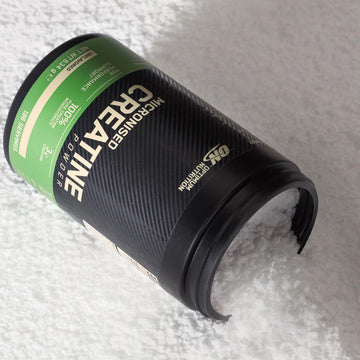
Optimum Nutrition Creatine is one example of a creatine product designed to fit easily into a regular sports nutrition routine.
You can also explore our complete range of creatine supplements to compare different options.
When Should You Take Creatine?
Creatine is generally taken consistently rather than only being used for individual workouts.
There isn't a need to think of it in the same way as a pre-workout product that has to be taken immediately before training.
Follow the serving directions on the particular creatine product you're using and choose a routine you can maintain consistently.
How Much Creatine Do You Need?
Serving sizes vary between products, so always check the individual instructions. For the authorised exercise-performance benefit, the beneficial effect is obtained with a daily intake of 3g of creatine in adults performing high-intensity exercise.
Taking more isn't automatically better, so follow the manufacturer's directions rather than increasing the serving unnecessarily.
Choosing a Creatine Supplement
When comparing creatine supplements, consider:
-
the type of creatine used
-
the amount of creatine per serving
-
the recommended serving
-
powder, capsule or tablet format
-
whether it's flavoured or unflavoured
-
any additional ingredients
Creatine monohydrate is a straightforward and extensively researched option for someone looking to add creatine to their sports nutrition routine.
Building Your Sports Nutrition Routine
Supplements are only one part of supporting exercise performance. Your training programme, diet, hydration, rest and recovery all matter.
Rather than adding supplements simply because they're popular, consider what your training involves and whether a product has a clear role within it.
For people regularly performing repeated bouts of high-intensity exercise, creatine is one of the most established options in sports nutrition.
Explore our range of creatine supplements, including creatine monohydrate powders and other convenient formats from trusted brands.
Or, if you're new to creatine, read our complete What Is Creatine? Benefits, How to Take It & More guide.
Evergreen – Good Health, Naturally.
Updated 2nd September 2026
Please note, this blog is for informational purposes only and should not replace medical advice. It's always best to consult your doctor before taking any new supplements if you are pregnant, breastfeeding, taking medication or have an existing medical condition.
References
-
Hultman, E., et al. (1996) Muscle creatine loading in men. J Appl Physiol (1985), 81(1):232–7.
-
Kreider, R. B., et al. (2017) International Society of Sports Nutrition position stand: safety and efficacy of creatine supplementation in exercise, sport, and medicine. Journal of the International Society of Sports Nutrition, 14, 18.
-
Antonio, J., et al. (2021) Common questions and misconceptions about creatine supplementation: what does the scientific evidence really show?. J Int Soc Sports Nutr 18, 13.
-
Green, A.L., et al. (1996) Carbohydrate ingestion augments skeletal muscle creatine accumulation during creatine supplementation in humans. Am. J. Physiol: 271:821.
-
Hespel, P., et al. (2001) Oral creatine supplementation facilitates the rehabilitation of disuse atrophy and alters the expression of muscle myogenic factors in humans. J. Physiol. 536:625–33.
-
Op ’t, E., et al. (2001) Effect of oral creatine supplementation on human muscle GLUT4 protein content after immobilization. Diabetes. 50, 18-23.